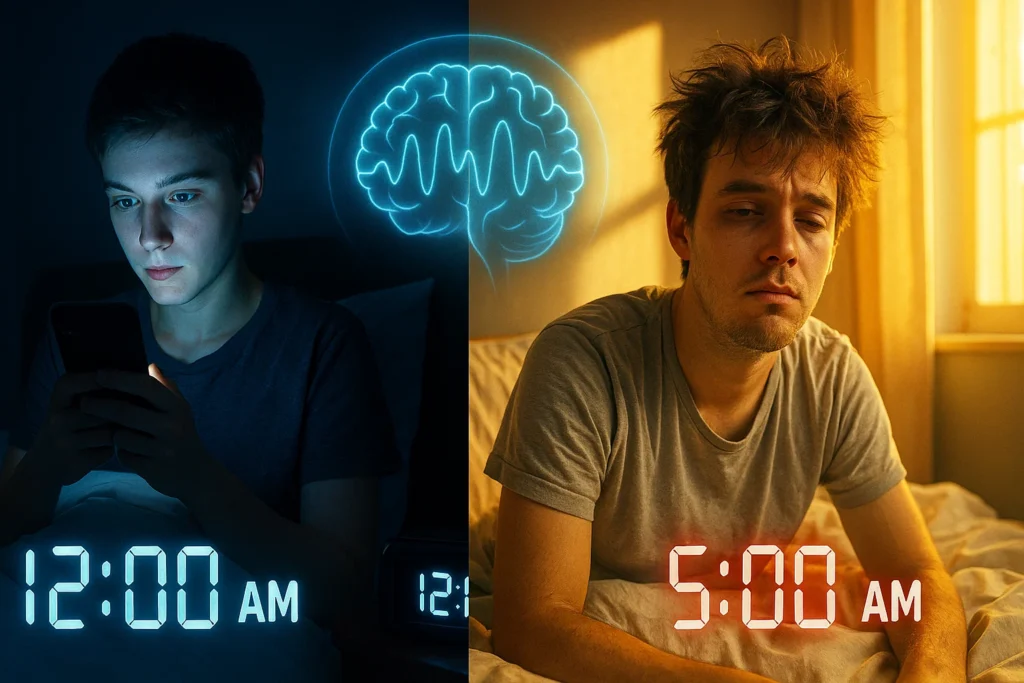

Have you ever wondered why staying awake until midnight feels natural, but waking up at 5 a.m. feels like torture? Many people blame themselves for being “lazy” or “undisciplined,” but the truth is far more scientific. According to neurologists, the real reason lies inside your brain, in something called the circadian rhythm — your body’s internal clock that runs every day.
This rhythm doesn’t just decide when you feel sleepy or alert. It also controls important functions like hormone release, body temperature, and even how your brain chemicals work. Let’s break down why late nights come more easily than early mornings, and what you can do about it.
The Brain’s Internal Clock
Inside a small region of your brain called the hypothalamus sits a control center known as the suprachiasmatic nucleus (SCN). This part of the brain acts like a master clock. It keeps track of time by responding to external signals — mainly light.
When the sun sets, your body starts to produce a hormone called melatonin, which makes you sleepy. When the sun rises, melatonin levels drop, and the hormone cortisol rises, helping you feel alert.
But here’s the catch: this process isn’t the same for everyone. Some people naturally release melatonin later than others, which makes them “night owls.” For them, staying up late feels smooth and effortless, but waking up early can feel almost impossible.
Why Many People Struggle With Mornings
For teenagers and young adults in particular, the circadian rhythm is naturally delayed. This means:
- Their body tells them to stay awake late into the night.
- The release of melatonin (the sleep signal) happens later than in older adults.
- As a result, falling asleep early feels unnatural, and waking up early feels like fighting against biology.
Pushing bedtime forward — staying awake past midnight — is actually easier for the brain than forcing itself to wake up before it’s ready. That’s why alarms at 5 or 6 a.m. feel so painful: your brain’s chemistry is still in “night mode.”
The Role of Brain Chemicals
Sleep is not just about habit or willpower. It is deeply connected to brain chemistry.
One important chemical is adenosine. This neurotransmitter builds up in your brain during the day, creating “sleep pressure.” The longer you stay awake, the more adenosine collects, and the sleepier you feel.
When you finally sleep, adenosine levels drop, giving you a fresh start the next day.
But here’s where it gets tricky:
- If you stay awake late at night, adenosine continues to build up, but your circadian rhythm may still encourage alertness, so you don’t feel tired.
- If you wake up early before your brain is ready, the balance between adenosine clearance and circadian signals is disrupted. This creates the grogginess and heavy-headed feeling people often experience when the alarm goes off too soon.
Technology Makes It Worse
Modern lifestyles only add fuel to the fire. Bright screens from phones, laptops, and televisions give off blue light, which tricks your brain into thinking it is still daytime.
As a result, melatonin release is delayed even further. This makes it easier to push bedtime later and later. On the other hand, waking up early requires the body to raise cortisol and body temperature quickly, something the brain cannot do efficiently if it still thinks it is nighttime.
This explains why so many people scroll on their phones until 1 a.m. and then struggle miserably when the alarm rings at 6 a.m.
Night Owls vs. Early Birds
Neurologically speaking, some people are wired to thrive late at night, while others naturally rise early. These differences are not about discipline but about biology.
- Night owls: Their circadian rhythm is shifted later. They feel energetic past midnight but groggy in the morning.
- Early birds: Their rhythm aligns with earlier melatonin release, making mornings easier for them.
The problem arises when society’s demands — like school starting at 7 a.m. or office jobs beginning at 9 a.m. — clash with someone’s natural rhythm. This misalignment can cause long-term problems.
Health Effects of Poor Alignment
When your natural body rhythm and your lifestyle don’t match, the impact goes beyond sleepiness. Over time, it can lead to:
- Chronic fatigue — a constant sense of tiredness no matter how long you sleep.
- Poor focus and concentration — difficulty paying attention at work or school.
- Mood swings — irritability, anxiety, or mild depression.
- Sleep disorders — irregular sleep patterns that make recovery harder.
This is why neurologists warn that ignoring your body clock for too long can affect not only your productivity but also your mental health.
Can You Train Yourself to Be a Morning Person?
The good news is that while your natural clock has strong control, you can make small adjustments. Doctors suggest:
- Control light exposure
- Get bright sunlight in the morning to signal your brain it’s time to wake up.
- Limit blue light from screens in the evening. Use night mode or avoid screens an hour before bed.
- Keep a consistent sleep schedule
- Go to bed and wake up at the same time every day, even on weekends.
- Over time, your brain adapts to the pattern.
- Use bedtime rituals
- Reading, meditation, or light stretching before bed can help signal the brain to prepare for sleep.
- Avoid stimulants late in the day
- Caffeine, nicotine, and even heavy meals close to bedtime can delay sleep onset.
- Create the right sleep environment
- Keep your bedroom dark, cool, and quiet. Your brain associates such conditions with rest.
With discipline and proper management of light and routine, it is possible to shift the circadian rhythm slightly earlier, making mornings more manageable.
Final Thoughts
If you find it easy to binge shows late into the night but nearly impossible to wake up at dawn, remember: it’s not just a matter of willpower. Your brain is designed to follow rhythms, and for many people, those rhythms favor late nights.
Blaming yourself for not being a morning person misses the science. The struggle is biological, not moral. But by understanding how your body clock works — and by making small lifestyle changes like controlling light, reducing late-night screen use, and following regular sleep schedules — you can work with your brain instead of against it.
So next time you hit the snooze button, don’t feel guilty. Your brain is simply reminding you that it’s still wired for rest.
For the Best Money saving Online shopping deals, JOIN our Telegram Channel https://t.me/crazziee_stuff1