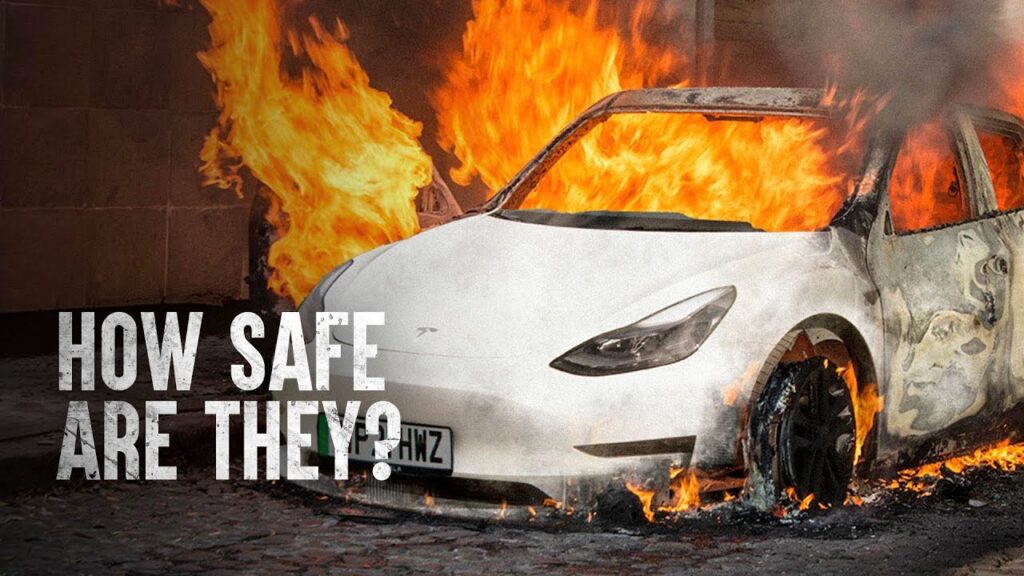

Electric vehicles (EVs) are transforming the way we travel—quiet, efficient, and eco-friendly. But every once in a while, headlines appear about an EV catching fire or exploding, raising questions about how safe these futuristic cars really are. The truth is, while EV fires are rare, when they do happen, they’re very different from traditional fuel fires. The key lies in the lithium-ion batteries that power these cars.
Let’s dive deep into why electric vehicles sometimes explode, and what actually happens inside their batteries when they are exposed to extreme heat or damage.
1. The Heart of an EV: Lithium-Ion Batteries
Every electric vehicle is powered by a large pack of lithium-ion cells—the same type used in smartphones and laptops, but on a much bigger scale. These batteries store energy by moving lithium ions back and forth between two electrodes:
- Anode (negative side) – usually made of graphite.
- Cathode (positive side) – made from lithium compounds like nickel, manganese, and cobalt.
Each cell also contains a liquid electrolyte, which allows ions to move but can become highly flammable under certain conditions. Thousands of these cells are packed tightly together, sealed, and managed by a sophisticated Battery Management System (BMS).
2. The Real Cause: Thermal Runaway
The main reason an EV battery can catch fire or explode is a phenomenon called thermal runaway. It’s a chain reaction that happens when one part of the battery overheats and starts a self-fueling cycle:
- Excess heat builds up inside one cell—due to damage, overcharging, manufacturing defects, or exposure to high external temperatures.
- The electrolyte begins to break down, releasing more heat and gases.
- The rising heat spreads to neighboring cells, causing them to heat up and release energy too.
- This domino effect causes temperatures to skyrocket beyond 1,000°C (1,800°F), resulting in fire or explosion.
Unlike a petrol fire, which burns and can be quickly extinguished, a lithium-ion fire continues as long as the chain reaction is active inside the cells.
3. How Extreme Heat Triggers Reactions
Lithium-ion batteries are highly sensitive to temperature. Normally, they operate best between 15°C and 45°C (59°F–113°F). When exposed to heat beyond this range—say, from a nearby fire, direct sunlight, or even a faulty charger—the internal components start to degrade.
- Electrolyte Expansion: The liquid electrolyte expands and may rupture the battery casing.
- Gas Formation: Oxygen and carbon dioxide are released inside the cell.
- Internal Short Circuit: If the separator (a thin film between electrodes) melts, the electrodes can touch, creating a short circuit that triggers immediate combustion.
This is why a damaged or overheated EV battery can suddenly ignite hours—or even days—after an accident or heat exposure.
4. Why EV Fires Are Hard to Extinguish
Once a lithium-ion battery catches fire, it behaves differently from normal fuel. The fire can reignite multiple times even after being put out, because trapped cells deep inside the battery continue reacting.
Firefighters often need special cooling methods—like submerging the battery pack in water or using foam agents—to stop the reaction. Traditional fire extinguishers are often ineffective because the fire isn’t fueled by oxygen—it’s fueled by the battery’s own chemical energy.
5. Prevention and Safety Innovations
Despite the rare incidents, EV manufacturers are heavily focused on preventing battery fires through advanced technology:
- Battery Management Systems (BMS): Constantly monitor voltage, temperature, and charging rates to prevent overheating.
- Thermal barriers: Insulate each cell to stop heat from spreading in case one cell fails.
- Coolant systems: Circulate liquid coolant around the battery pack to regulate temperature.
- Safer chemistries: Newer batteries like Lithium Iron Phosphate (LFP) are more stable and less likely to catch fire compared to older Nickel-based types.
Manufacturers also design EVs with impact-resistant casings, ensuring that the battery remains protected during accidents.
6. How Drivers Can Stay Safe
Most EV fires are preventable. Here are a few safety practices that help minimize risk:
- Avoid overcharging or leaving the car plugged in for unnecessarily long periods.
- Park away from direct sunlight during extreme heat.
- Never drive or charge an EV with visible battery damage.
- Always follow manufacturer-recommended charging cables and stations.
Final Thoughts
Electric vehicles represent the future of clean transportation—but they rely on powerful energy storage systems that demand respect and care. When exposed to extreme heat, lithium-ion batteries can react violently through thermal runaway, leading to fire or explosion.
However, thanks to modern safety systems, smart cooling designs, and continuous innovation, such incidents remain extremely rare compared to traditional fuel fires. In the coming years, as battery technology evolves, EVs will become even safer—proving that the road to sustainability doesn’t have to come with sparks.
For the Best Money saving Online shopping deals, JOIN our Telegram Channel https://t.me/crazziee_stuff1