
Petrol, or gasoline, powers cars, buses, motorcycles, and many machines worldwide. It’s deeply connected to how we live, work, and move around. But imagine a world where petrol suddenly disappears overnight. How would daily life change? How would cities, economies, and our routines be affected?
This article explores the consequences of running out of petrol, how transportation, industries, and energy systems would be impacted, and how society might adapt.
Immediate Effects on Transportation
1. Cars and Motorbikes Stop Running
- Petrol-powered vehicles would come to a complete halt.
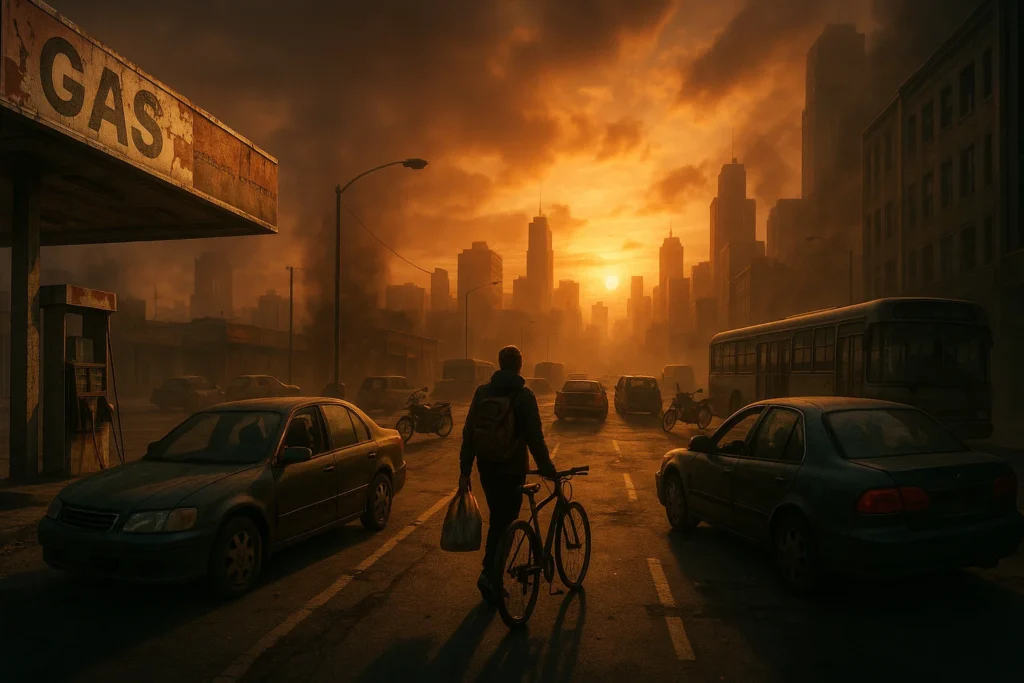
- Roads would be filled with stranded cars, creating traffic chaos.
- Delivery vehicles would stop, affecting the supply of goods.
2. Public Transportation Crashes
- Buses, taxis, and small vans that run on petrol would stop.
- Commuters would struggle to reach work or school.
- Many people would be forced to walk or cycle long distances.
3. Air Travel Affected
- Most airplanes use jet fuel derived from petrol.
- Flights would be grounded, affecting business, tourism, and cargo transport.
- International trade and travel would face major disruptions.
Impact on Industries and Jobs
1. Factories and Machinery
- Many machines in factories run on petrol or diesel generators.
- Production of goods like clothes, electronics, and processed food could slow down or stop completely.
2. Delivery and Logistics
- Trucks transporting food, medicine, and other essentials would stop moving.
- Supermarkets and stores might face empty shelves within a few days.
3. Jobs at Risk
- Drivers, delivery workers, pilots, and factory workers would face immediate challenges.
- Industries dependent on petrol would suffer losses, leading to layoffs.
Daily Life Disruptions
1. Rising Prices
- Scarcity of fuel would drive prices of goods higher, as transportation becomes difficult.
- Petrol alternatives like LPG or electric options might not be enough to meet demand.
2. Food Supply Challenges
- Vegetables, fruits, and groceries rely on fuel-powered trucks.
- Farmers might struggle to transport their harvest, leading to food shortages.
3. Energy Supply Problems
- Petrol is still used in some power generators.
- Areas relying on petrol-powered electricity might experience blackouts.
4. Healthcare Impact
- Ambulances, emergency services, and medical supply transport could face delays.
- Patients might have difficulty reaching hospitals in emergencies.
Changes in Personal Lifestyle
1. Commuting
- Walking, cycling, or using electric bikes would become the main modes of travel.
- People might relocate closer to workplaces to reduce travel.
2. Shopping and Errands
- Daily trips for groceries and essentials would be limited.
- People might plan weekly shopping trips instead of daily errands.
3. Leisure and Travel
- Road trips and vacations by car would be impossible.
- Air travel restrictions would make international tourism rare.
Environmental Effects
- Reduced petrol usage would immediately cut air pollution.
- Cities might experience cleaner air and quieter streets.
- However, a sudden shift could cause waste in existing petrol supplies and logistical challenges.
Alternatives to Petrol
1. Electric Vehicles (EVs)
- EVs could replace petrol cars, but infrastructure and battery availability are limited.
- Charging stations would need to expand rapidly.
2. Public Transport Using Electricity
- Trains, metros, and trams powered by electricity could carry more people efficiently.
3. Bicycles and Walking
- More people would adopt cycling and walking, improving fitness but slowing travel.
4. Biofuels and Hydrogen
- Some vehicles can run on biofuels or hydrogen, but production is not enough for global needs.
Long-Term Societal Changes
- Urban Planning: Cities might redesign roads to favor bicycles and pedestrian lanes.
- Work From Home: Remote work could become more common to reduce commuting needs.
- Global Trade Shift: Countries dependent on oil exports would face economic crises.
- Innovation: Rapid development of alternative energy technologies would become a priority.
Lessons From Running Out of Petrol
- Dependence on petrol is extremely risky for daily life and the economy.
- Transitioning to renewable energy sources like electricity, solar, and wind is crucial.
- Developing local production of essentials can reduce the impact of fuel shortages.
- Lifestyle changes like walking, cycling, and minimizing unnecessary travel can make society more resilient.
Conclusion
If petrol disappeared tomorrow, the world would face massive disruptions in transportation, industries, daily routines, and global trade. People would struggle to commute, food supply chains would break down, and jobs tied to petrol would be at risk. However, it would also push society toward renewable energy, electric vehicles, and sustainable living.
While such a scenario is extreme, it teaches an important lesson: relying heavily on petrol is unsustainable. Preparing for alternative energy and adapting our lifestyles can prevent chaos and ensure a smoother transition to a world less dependent on fossil fuels.
For the Best Money saving Online shopping deals, JOIN our Telegram Channel https://t.me/crazziee_stuff1