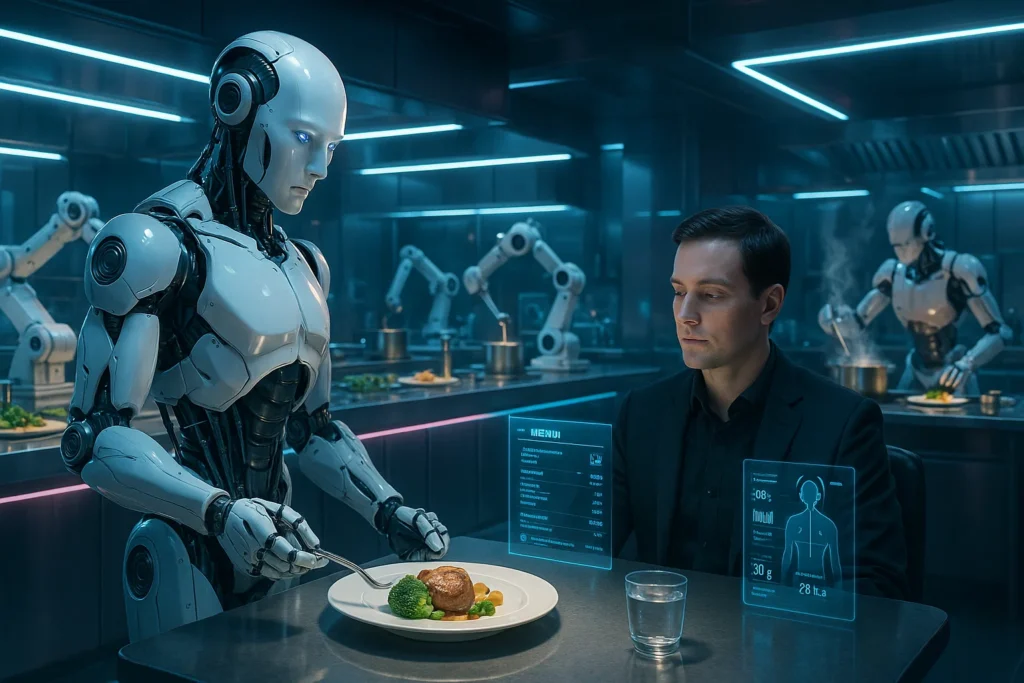

The future of dining is no longer just about delicious flavors or elegant ambiance—it’s about automation and precision. Across the world, smart restaurants are emerging where robots handle everything: from chopping vegetables and cooking dishes to serving meals with machine-like efficiency. But as we imagine a world where your favorite meal is made entirely by robots, a question arises: what happens when you eat food cooked completely by machines?
Let’s explore how this futuristic dining experience might affect your body, mind, and even your relationship with food.
1. Precision Cooking and Consistent Nutrition
Robots cook with mathematical accuracy. They can measure ingredients down to the milligram and maintain precise cooking temperatures. This ensures that food retains optimal nutrition and is neither overcooked nor undercooked.
When you eat food prepared with such precision, your body benefits from consistent calorie intake, better nutrient retention, and minimal oil or salt imbalance. In the long run, this could improve digestion, reduce bloating, and help maintain a healthier metabolism compared to irregular human-made meals.
2. Reduced Risk of Foodborne Illness
Human error is one of the leading causes of food contamination—improper handling, unwashed hands, or cross-contamination in kitchens. Robots eliminate much of this risk. Automated systems maintain strict hygiene, controlled temperatures, and sterilized environments.
This means fewer chances of consuming bacteria like E. coli or Salmonella. For your body, that translates into better gut health, fewer infections, and a stronger immune system.
3. Custom Nutrition Tailored to Your Body
In future smart restaurants, robot chefs will be powered by AI and biometric data. Imagine walking into a restaurant where a scanner reads your health profile—heart rate, blood sugar level, and nutrient needs—and prepares a meal designed exactly for you.
Your body would receive food that supports personalized nutrition, balancing protein, carbohydrates, and vitamins according to your current condition. Over time, such meals could improve energy levels, digestion, and even mental focus.
4. Possible Emotional Disconnect From Food
However, eating food cooked entirely by machines could change how we emotionally connect with what we eat. Cooking has always been a deeply human experience—filled with smells, sounds, and emotions. Food prepared by robots may lack that personal touch, cultural emotion, and warmth that comes from human-made dishes.
This emotional detachment might subtly affect your brain’s dopamine response—the pleasure chemical released when we enjoy a meal prepared with care and intention. Over time, food could become more about function and less about feeling.
5. Dependence on Technology for Taste
When machines cook for long enough, your taste buds might adapt to a kind of algorithmic perfection—consistent flavor, uniform texture, and exact seasoning every time. While it sounds ideal, it could reduce your tolerance for natural variations in homemade food. Your brain might associate satisfaction only with “machine-grade” precision, leading to reduced appreciation for traditional or imperfect meals.
6. Energy and Sustainability Impact
Robot kitchens are designed for efficiency—using minimal water, electricity, and ingredients. The food you eat from such systems could have a smaller environmental footprint. Cleaner energy use and zero food waste mean your body benefits indirectly through a healthier planet. Air and water quality improve, which in turn supports long-term respiratory and metabolic health.
7. Psychological Comfort and Trust
Humans have an emotional bond with food safety and trust. Knowing that a robot cooked your food without errors might give some people psychological comfort, while others might feel uneasy about the lack of a human chef. Your stress levels can influence digestion; therefore, your perception of robot-cooked meals could physically affect how well your body processes the food.
Final Thoughts
Eating food cooked entirely by robots may sound like science fiction, but it’s quickly becoming reality. The advantages—precision nutrition, hygiene, sustainability, and personalization—could revolutionize health and diet. Yet, the emotional and psychological connection to food might fade in the process.
In the future, our challenge won’t just be about teaching robots how to cook—it’ll be about teaching ourselves how to balance technology and emotion in the way we eat. After all, food nourishes more than just the body—it feeds the human soul.
For the Best Money saving Online shopping deals, JOIN our Telegram Channel https://t.me/crazziee_stuff1