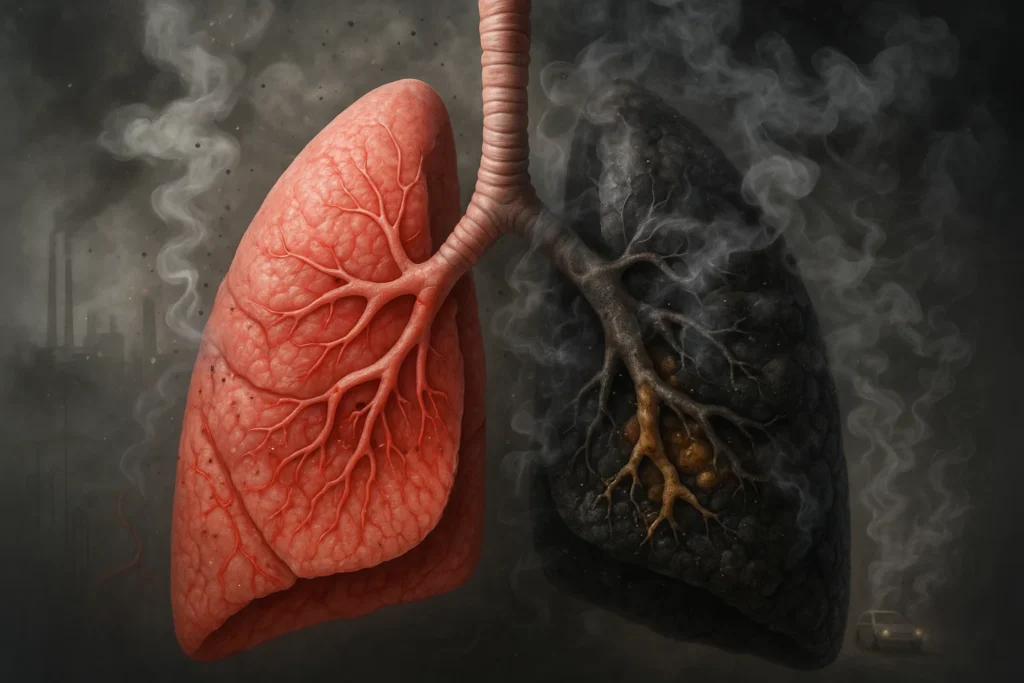

Every time you take a breath, your lungs draw in oxygen that keeps every cell in your body alive. But what happens when the air you breathe is mixed with pollution, smoke, or harmful particles? Whether it’s from vehicle exhaust, cigarette smoke, industrial emissions, or even burning garbage, polluted air silently damages your lungs with every breath. Over time, it doesn’t just affect your breathing—it can change the structure and function of your lungs completely.
Let’s explore what really happens inside your lungs when you breathe polluted air or smoke regularly.
1. How Lungs Normally Work
Your lungs are made up of millions of tiny air sacs called alveoli, where oxygen from the air passes into your blood and carbon dioxide leaves your body. These air sacs are protected by thin layers of mucus and tiny hair-like structures called cilia that trap and clear out dust or microorganisms. In clean air, this system works perfectly—oxygen in, carbon dioxide out, with little irritation or damage.
2. What Enters Your Lungs With Polluted Air
Polluted air isn’t just dust. It contains a mix of fine particles (PM2.5 and PM10), toxic gases like nitrogen dioxide and sulfur dioxide, carbon monoxide, ozone, and chemicals from burning fuels. Cigarette or vehicle smoke also contains tar, formaldehyde, benzene, and heavy metals—all of which are poisonous to human cells.
When you inhale these pollutants, many are too small to be filtered by your nose or throat. They travel deep into your bronchial tubes and alveoli, where they begin to cause irritation and inflammation.
3. The Immediate Reaction: Irritation and Inflammation
Your body sees these foreign particles as threats. The immune system quickly reacts by sending white blood cells to attack them. This response releases chemicals that cause inflammation—swelling and redness of lung tissue. Over time, the constant inflammation thickens and scars the airways, making them narrower.
That’s why people exposed to pollution or smoke often experience coughing, breathlessness, or wheezing—their airways are struggling to stay open and clear.
4. Damage to Cilia and Mucus Build-Up
Cilia, the tiny hair-like filters in your lungs, are the first line of defense against pollutants. Continuous exposure to smoke or toxins paralyzes or destroys these cilia. Without them, mucus and harmful particles accumulate in the airways instead of being cleared out.
This buildup leads to chronic coughing (as the body tries to clear the mucus) and increases the risk of respiratory infections, since bacteria and viruses can easily thrive in the trapped mucus.
5. Long-Term Effects on Lung Tissue
When pollution and smoke exposure continues for months or years, the damage becomes more serious:
- Chronic Bronchitis: Persistent inflammation causes the airways to narrow permanently, making it harder to breathe.
- Emphysema: The delicate alveoli start breaking down, reducing the surface area for oxygen exchange. This leads to constant shortness of breath.
- Asthma: Pollutants make the airways overly sensitive, triggering attacks when exposed to dust, smoke, or even cold air.
- Lung Cancer: Some chemicals in smoke and pollution can damage DNA in lung cells, causing mutations that lead to cancer.
6. Effect on Blood and Other Organs
The smallest pollution particles can pass through the alveoli into the bloodstream, spreading harmful substances throughout the body. This increases the risk of heart disease, high blood pressure, and stroke. The blood also carries less oxygen, leading to fatigue and reduced stamina.
7. Can the Lungs Recover?
The good news is that the lungs have some capacity to heal if exposure stops early. Cilia can regrow, and inflammation can reduce over time. Quitting smoking, using air purifiers, wearing masks in polluted areas, and spending time in clean-air environments can help recovery. However, once diseases like emphysema or lung cancer develop, the damage is usually permanent.
Final Thoughts
Breathing polluted air or smoke may not cause instant harm, but every breath leaves a mark on your lungs. From damaging cilia to causing irreversible scarring, pollution silently chips away at your body’s ability to breathe freely. Protecting your lungs means protecting your life—because clean air isn’t just comfort, it’s survival.
For the Best Money saving Online shopping deals, JOIN our Telegram Channel https://t.me/crazziee_stuff1