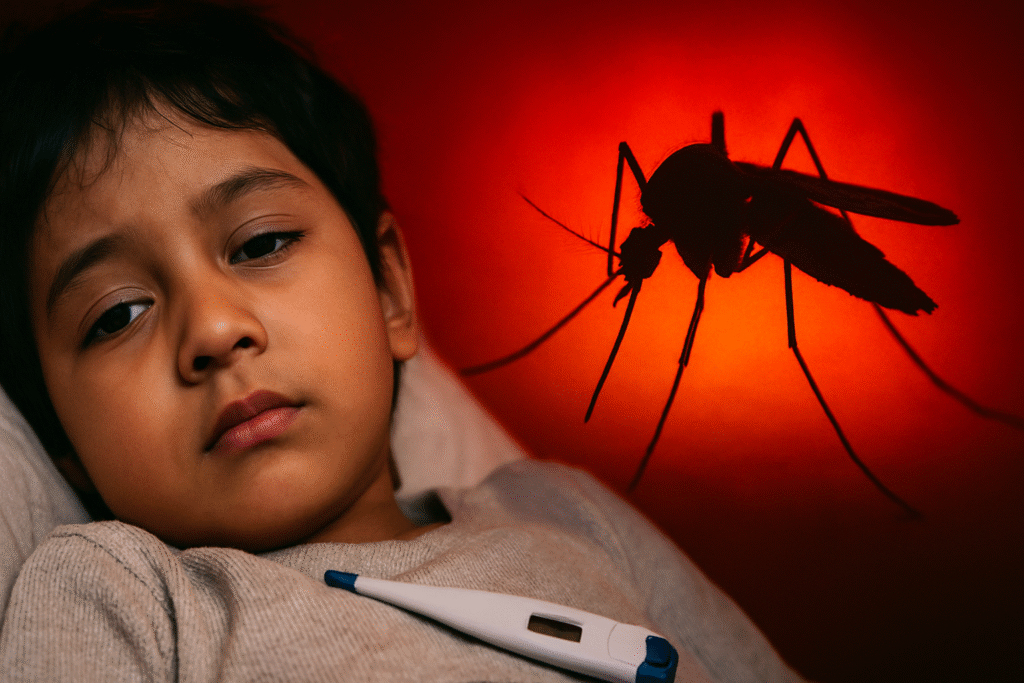

With the arrival of the monsoon season, dengue cases are expected to rise once again across the country. This mosquito-borne illness can become dangerous in a short span of time, particularly for children whose immune systems are still developing. Since the infection often begins with flu-like symptoms, it can be mistaken for a common viral fever, which delays timely treatment. Recognizing the early signs is therefore crucial for parents.
Children may not always be able to describe their discomfort, making it harder to identify dengue in its initial stages. Subtle changes such as constant fever, unusual fatigue, or loss of appetite are sometimes brushed aside as routine viral complaints.
Dr. Sarita Sharma, Senior Consultant — Paediatrics at PSRI Hospital, New Delhi, highlights the key symptoms that parents should watch for to ensure quick medical attention before the illness worsens.
Early Symptoms of Dengue in Children
According to Dr. Sharma, dengue symptoms in children often appear suddenly and may resemble other viral infections. Some of the early red flags include:
- Sudden high fever
- Severe headache
- Pain behind the eyes
- Muscle or joint pain
- Nausea and vomiting
- Skin rashes
In younger children, irritability, unusual tiredness, or continuous crying may also indicate the onset of dengue. These symptoms usually appear within 4 to 10 days after a mosquito bite from an infected carrier.
Differentiating Dengue from Common Viral Infections
It can be difficult to tell dengue apart from other viral illnesses in the beginning, but there are certain differences. Dengue fever tends to rise suddenly and is usually much higher than the gradual fevers caused by common colds or flu. Body aches, joint pain, and pain behind the eyes are more specific to dengue. Additionally, rashes and persistent vomiting make dengue more likely, whereas viral fevers in children often come with cough, sore throat, or runny nose — symptoms less common in dengue.
What Parents Should Do If Dengue Is Suspected
If parents suspect dengue, immediate medical consultation is essential. Home remedies should be avoided. Dr. Sharma advises:
- Only use medicines prescribed by a doctor.
- Avoid aspirin and ibuprofen, as they can increase the risk of bleeding.
- Paracetamol may be used safely for fever, if recommended by a doctor.
- Keep the child well-hydrated with water, oral rehydration solutions, coconut water, or clear soups.
Parents should be extra vigilant about danger signs such as severe abdominal pain, ongoing vomiting, bleeding gums or nose, blood in stools, or unusual drowsiness. If any of these symptoms appear, the child must be taken to a hospital without delay.