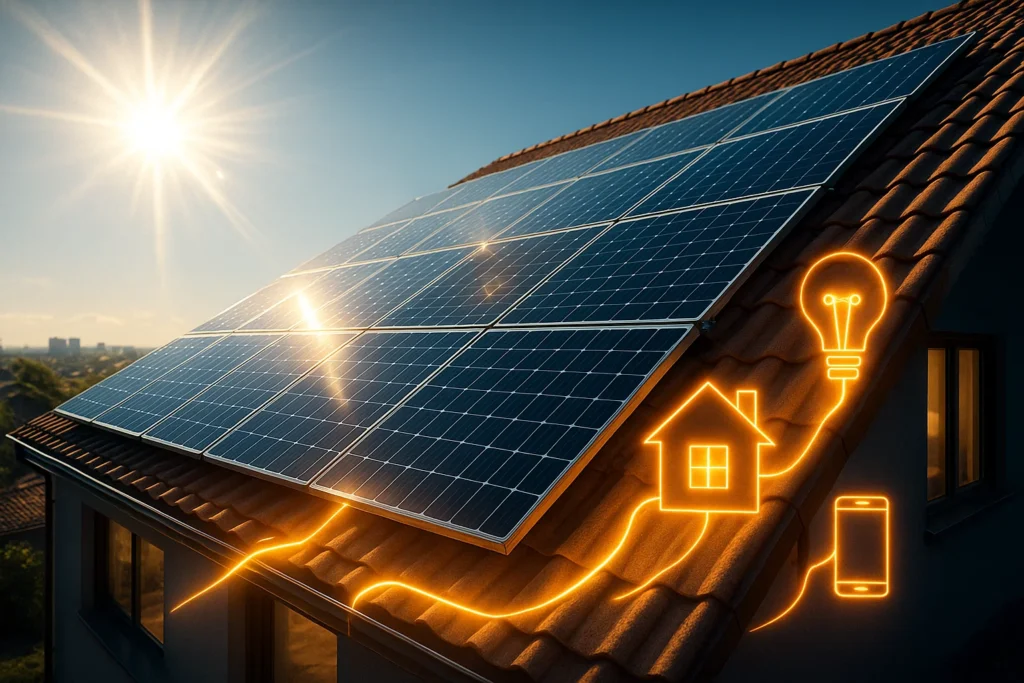

The sun gives us more energy in one hour than the whole world uses in a year. Solar panels allow us to capture part of that energy and turn it into electricity that can power homes, lights, and even mobile devices. But how does this happen? Many people see solar panels on rooftops or fields but don’t really understand the science behind them. The truth is, solar energy is based on a simple idea: converting sunlight into usable electricity using solar cells.
In this article, we’ll explain in simple terms how solar panels work, what happens inside them, and why they are becoming one of the most important energy sources in today’s world.
The Basics of Solar Panels
- Solar panels are made up of many smaller units called solar cells.
- Each solar cell is usually made from a material like silicon, which has special electrical properties.
- When sunlight hits these cells, they generate a flow of electricity.
- Many cells are connected together in one panel, and many panels can be combined to form a solar system that powers homes or businesses.
Step-by-Step: How Sunlight Turns Into Electricity
1. Absorbing Sunlight
- When sunlight falls on a solar panel, the photons (tiny particles of light) hit the solar cells.
- These photons carry energy from the sun.
2. Releasing Electrons
- Inside the solar cell, photons knock loose electrons from atoms in the silicon material.
- Electrons are negatively charged particles that can move and carry electricity.
3. Creating an Electric Current
- Solar cells are designed with a built-in electric field that pushes the loose electrons in one direction.
- This movement of electrons creates a flow of electric current.
4. Direct Current (DC) Power
- The electricity generated by solar panels is direct current (DC).
- But most homes and devices use alternating current (AC).
5. Inverter Conversion
- An inverter is used to convert DC power into AC power.
- Once converted, the electricity can be used to power lights, refrigerators, fans, and even mobile chargers.
How Solar Power Reaches Homes and Devices
- Panels collect sunlight → generate DC electricity.
- Inverter converts DC to AC → makes it usable for home appliances.
- Electrical panel (switchboard) → distributes power to different parts of the house.
- Utility connection or batteries:
- If connected to the grid, extra electricity goes to the power company.
- If connected to batteries, extra electricity is stored for nighttime use.
Solar Panels and Mobile Devices
- Small solar panels can directly charge mobile devices or power banks.
- Portable solar chargers are popular for camping, traveling, and emergency situations.
- Larger home systems can easily power multiple devices at the same time.
Advantages of Solar Energy
1. Renewable and Clean
- Solar energy comes directly from the sun, which will last for billions of years.
- It doesn’t produce smoke, harmful gases, or pollution.
2. Saves Money
- Once panels are installed, sunlight is free.
- Over time, families can save a lot on electricity bills.
3. Energy Independence
- Homes with solar panels depend less on power companies.
- Stored solar power in batteries can be used during power cuts.
4. Low Maintenance
- Solar panels usually last 20–25 years and need little maintenance, just cleaning.
5. Helps the Environment
- Reduces the use of coal, oil, and gas, which cause climate change.
Limitations of Solar Panels
1. Weather Dependence
- Solar panels only work when sunlight is available.
- On cloudy days or at night, power generation is low or zero.
2. High Initial Cost
- Buying and installing solar panels can be expensive.
- Though costs are falling, the upfront investment is still high.
3. Space Requirement
- To generate a lot of power, many panels are needed.
- This requires enough rooftop or land space.
4. Energy Storage Challenges
- Batteries to store solar energy are still costly.
- Without batteries, people depend on the electricity grid at night.
Different Uses of Solar Power
- Homes: Lights, fans, TVs, refrigerators, and air conditioners can all run on solar.
- Street Lights: Many cities now use solar-powered street lights.
- Water Pumps: Farmers use solar pumps for irrigation.
- Schools and Hospitals: Solar energy reduces running costs and ensures reliable power.
- Mobile Devices: Portable solar panels and solar-powered chargers are useful for small electronics.
The Future of Solar Panels
Solar technology is improving quickly. Some new advancements include:
- More Efficient Panels: Modern solar panels can convert more sunlight into electricity.
- Solar Roof Tiles: Instead of large panels, tiles that look like regular roofs can generate power.
- Better Batteries: New battery technology will make storing solar power easier and cheaper.
- Solar Windows: Glass windows that act like solar panels are being developed.
With these advancements, solar power could become the main source of electricity worldwide.
Conclusion
Solar panels are not just shiny plates on rooftops. They are powerful devices that convert sunlight into electricity by using science at the atomic level. By absorbing sunlight, freeing electrons, and creating a current, solar panels generate power that is then converted into usable electricity for homes, lights, and mobile devices.
While challenges like high cost and storage remain, the advantages of solar energy make it one of the best solutions for a cleaner and brighter future. With growing demand and better technology, solar power could soon light up not just homes, but entire cities, with the energy of the sun.
For the Best Money saving Online shopping deals, JOIN our Telegram Channel https://t.me/crazziee_stuff1