
Fever is one of the most common signs that your body is fighting an infection or illness. While many people think of fever as an enemy, it is actually a protective response—a signal that your immune system is working hard. The sudden rise in body temperature may feel uncomfortable, but it plays a crucial role in slowing down invading germs and activating defense mechanisms. Let’s break down what happens inside the human body during a fever and why temperature rises so quickly.
1. What Is a Fever?
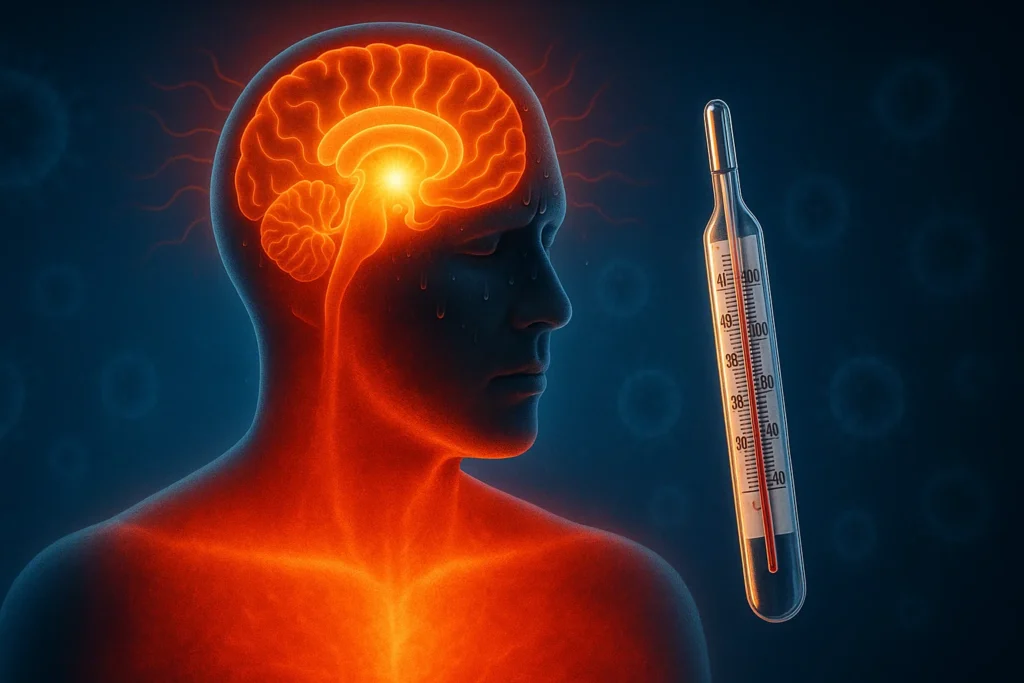
Normally, the human body maintains a stable temperature of around 98.6°F (37°C), regulated by a part of the brain called the hypothalamus. A fever occurs when the hypothalamus resets your body’s “thermostat” to a higher level. This isn’t random—it’s triggered by chemicals released in response to infection, inflammation, or other health conditions.
2. How the Immune System Triggers Fever
When bacteria, viruses, or other pathogens invade, your immune system releases special signaling molecules called pyrogens. These can come from the invading microbes themselves or from your body’s own immune cells. Pyrogens travel to the hypothalamus and instruct it to raise the body’s temperature set point.
This shift makes your body suddenly feel cold—even though your actual temperature is normal. That’s why you often experience chills and shivering at the start of a fever. Your muscles contract rapidly to generate more heat, pushing your body toward the new temperature goal.
3. Why Does Body Temperature Rise Suddenly?
The sudden rise in temperature is a direct result of the hypothalamus resetting its thermostat. To reach this higher target, your body conserves and generates heat through several mechanisms:
- Shivering: Rapid muscle contractions generate warmth.
- Constriction of blood vessels in the skin: This reduces heat loss, which is why your hands and feet may feel cold.
- Increased metabolic activity: Your body burns energy faster to produce heat.
Once these processes are in motion, your temperature climbs quickly until it matches the new set point, often within minutes to hours.
4. The Role of Fever in Fighting Infections
A higher temperature is not just an uncomfortable side effect—it actively helps your body fight infection. Here’s how:
- Slows down pathogens: Many bacteria and viruses cannot replicate efficiently at higher temperatures.
- Boosts immune efficiency: White blood cells, antibodies, and other immune defenses work more effectively in a warmer environment.
- Triggers healing processes: Fever promotes the release of proteins that help repair damaged tissues.
5. Common Symptoms During Fever
As your temperature rises, several symptoms may accompany the fever:
- Chills and body shivering
- Sweating (as the fever breaks)
- Headache and muscle aches
- Loss of appetite
- Fatigue and weakness
- Increased heart rate and breathing
These symptoms are not directly caused by pathogens but by the body’s effort to regulate and fight back.
6. Why Do You Sweat When Fever Breaks?
Once the infection starts coming under control, the hypothalamus resets the thermostat back to normal. At this point, your body needs to release excess heat. Sweating and dilation of skin blood vessels allow your temperature to fall, which is why people often wake up drenched in sweat after a fever begins to subside.
7. When Is Fever Dangerous?
Most fevers are temporary and harmless, but extremely high fevers—above 104°F (40°C)—can become dangerous, especially in children and older adults. Prolonged fever can lead to dehydration, confusion, or seizures. That’s why monitoring and managing fever is important, especially if it spikes suddenly or persists for several days.
8. The Bigger Picture: Fever as a Defense Mechanism
Although it may feel uncomfortable, fever is one of your body’s natural defense strategies. It signals that your immune system is actively fighting and working to restore balance. Instead of always seeing it as something negative, it’s better to recognize fever as a sign of your body’s resilience.
Final Thoughts
Fever is not just about heat—it is a carefully controlled biological response. From the release of pyrogens and the hypothalamus resetting your thermostat to the sudden shivering and eventual sweating, every stage serves a purpose. The quick rise in temperature helps slow down harmful invaders and strengthens your immune defenses.
So the next time you experience a fever, remember that it’s your body’s intelligent way of fighting back and protecting you from infection.
For the Best Money saving Online shopping deals, JOIN our Telegram Channel https://t.me/crazziee_stuff1