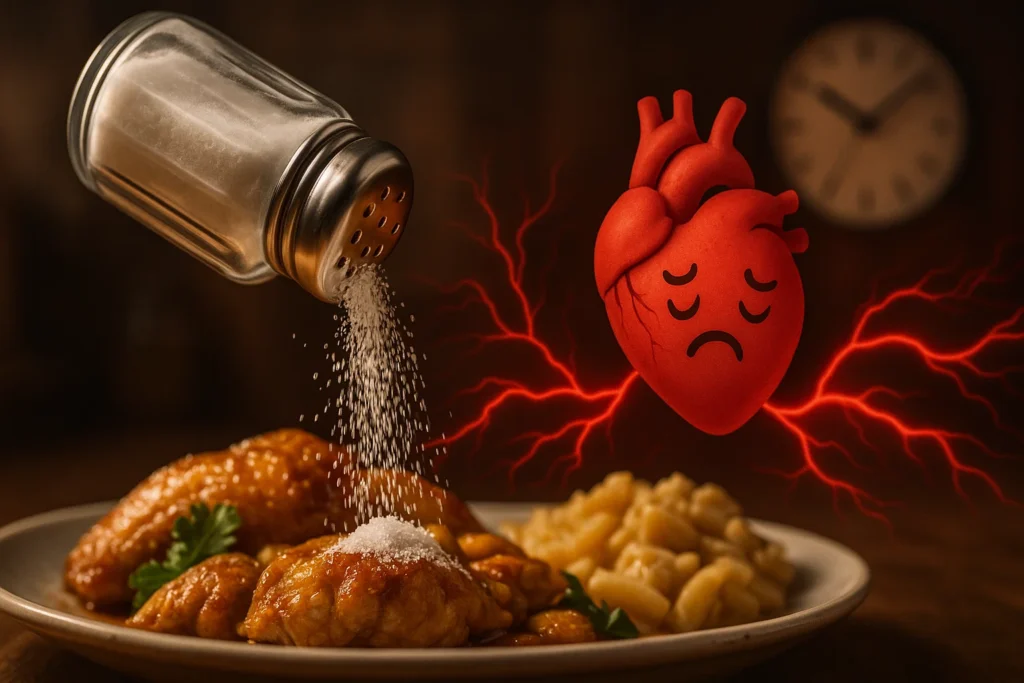

Salt is an essential mineral that helps our body function properly. It plays a role in nerve signals, muscle movement, and fluid balance. But too much salt can be dangerous. Eating excessive salt every day can raise blood pressure, harm your heart, kidneys, and even affect your energy levels.
This article explains why salt affects the body, how it increases blood pressure, and the long-term risks of consuming too much, all in simple terms.
What Is Salt?
- Chemically, salt is sodium chloride.
- Sodium is the component that affects blood pressure.
- Common sources of salt in daily diets include:
- Table salt added to food
- Processed and packaged foods
- Fast food, chips, and pickles
- Sauces, ketchup, and instant noodles
How Salt Affects the Body
1. Retains Water
- Sodium attracts and holds water in the body.
- When you eat too much salt, your body retains more water in the bloodstream.
- This increases the volume of blood circulating in blood vessels.
2. Increases Blood Pressure
- Higher blood volume means more pressure on blood vessel walls.
- The heart has to work harder to pump blood, raising blood pressure.
- This is why high salt intake is strongly linked to hypertension.
3. Strains the Heart and Arteries
- Continuous high blood pressure damages blood vessels, making them stiffer and narrower.
- Over time, this increases the risk of heart attack, stroke, and heart failure.
4. Affects Kidneys
- Kidneys filter blood and remove excess sodium.
- Too much salt forces kidneys to work harder, leading to long-term kidney problems.
- High sodium can contribute to kidney stones and reduced kidney function.
Daily Salt Recommendations
- The World Health Organization (WHO) recommends less than 5 grams of salt per day (about one teaspoon).
- Most people consume 8–12 grams daily, often unknowingly, due to processed foods.
- Reducing salt intake can lower blood pressure, even in healthy people.
Signs You Are Eating Too Much Salt
- Feeling thirsty often
- Swelling in hands, feet, or face (water retention)
- Frequent headaches
- High blood pressure readings
- Fatigue or low energy
How High Salt Intake Leads to Hypertension
- Sodium-Water Imbalance:
- Sodium pulls water into blood vessels → increases blood volume.
- Vascular Stiffness:
- Excess sodium can damage the lining of blood vessels → vessels become less flexible.
- Hormonal Changes:
- High sodium triggers hormones that retain even more water and salt, worsening blood pressure.
Long-Term Health Risks
Eating too much salt over months or years can lead to:
- Heart Disease: Strains the heart and increases the risk of heart attack.
- Stroke: Damaged blood vessels are more prone to rupture or clot formation.
- Kidney Disease: Extra sodium damages kidneys, causing chronic kidney problems.
- Osteoporosis: Excess salt can leach calcium from bones, weakening them.
- Stomach Cancer: Some studies suggest high salt diets may increase the risk of stomach cancer.
How to Reduce Salt Intake
1. Cook at Home
- Prepare meals with fresh ingredients instead of processed foods.
2. Read Labels
- Check packaged food labels for sodium content.
- Avoid high-salt snacks, sauces, and ready-to-eat meals.
3. Use Alternatives
- Use herbs, spices, lemon, or vinegar for flavor instead of salt.
4. Gradual Reduction
- Slowly reduce salt in your diet to allow your taste buds to adjust.
5. Limit Processed Foods
- Chips, instant noodles, frozen meals, and pickles are usually extremely high in salt.
Foods High in Hidden Salt
- Cheese and butter
- Bread and bakery items
- Canned soups and vegetables
- Breakfast cereals
- Fast food like burgers, pizzas, and fries
Benefits of Reducing Salt
- Lower blood pressure: Reduces strain on the heart.
- Reduced risk of stroke and heart disease
- Better kidney function
- Less water retention and swelling
- Improved energy levels
Conclusion
Salt is necessary for the body, but consuming too much every day can raise blood pressure, weaken the heart, and damage kidneys over time. High salt intake leads to water retention, increased blood volume, and stress on blood vessels. Reducing salt in your diet can prevent hypertension, improve heart and kidney health, and increase overall energy levels.
By being aware of hidden salt in foods and making small lifestyle changes, you can protect your health and enjoy long-term benefits.
For the Best Money saving Online shopping deals, JOIN our Telegram Channel https://t.me/crazziee_stuff1