
Washing clothes by hand is tiring and time-consuming. Modern washing machines have completely changed this task. They not only save time but also clean clothes more efficiently. But have you ever wondered how a washing machine actually cleans clothes? It’s not magic. It is a combination of detergent, water, and fast spinning circular motion that works together to remove dirt, stains, and bacteria from fabrics.
In this article, we’ll explore how washing machines work, the science behind cleaning, different types of machines, and tips to make them work better.
The Basics of a Washing Machine
A washing machine is essentially a mechanical device designed to clean clothes using water, detergent, and motion.
- Water: Dissolves detergent and penetrates the fabric.
- Detergent: Removes dirt, oils, and stains.
- Motion: Agitation or spinning loosens dirt particles and rinses them away.
There are two main types of washing machines:
- Top-loading machines: Clothes are loaded from the top. These use an agitator to move clothes in water.
- Front-loading machines: Clothes are loaded from the front. These rotate the drum horizontally, using gravity and water movement to clean clothes.
Step-by-Step: How Washing Machines Clean Clothes
1. Filling With Water
- The washing machine first fills with water at the correct level depending on the load.
- The water is usually warm or cold depending on the program selected.
- Water helps dissolve detergent and carry it into the fibers of clothes.
2. Mixing With Detergent
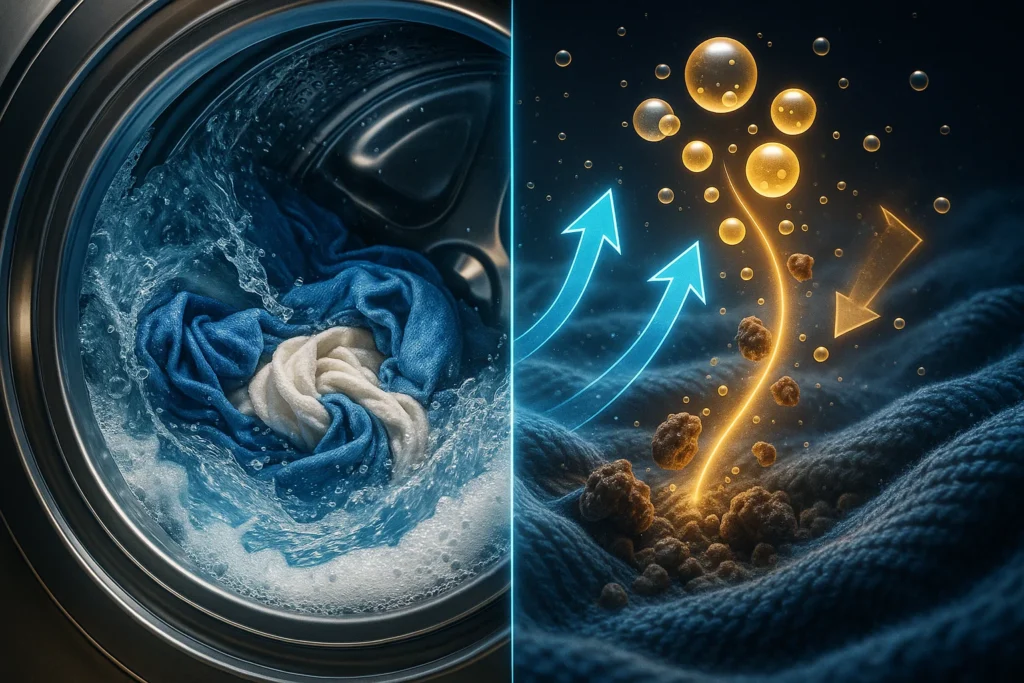
- Detergent contains surfactants, chemicals that help remove dirt and oil.
- Surfactants break down grease and lower surface tension, allowing water to penetrate fabrics more easily.
- Enzymes in detergent may also break down proteins, starches, or fats found in stains.
3. Agitation or Spinning
- The washing drum moves clothes in a circular motion, rubbing fabrics against each other.
- In top-loading machines, the agitator moves clothes up and down.
- In front-loading machines, the drum rotates, and clothes fall repeatedly inside the drum.
- This motion loosens dirt, oils, and particles from the fibers.
4. Rinsing
- After washing, the machine drains the dirty water.
- Fresh water is added to rinse away remaining detergent and dirt.
- Some machines repeat this process multiple times for cleaner results.
5. Spinning and Drying
- The final spin removes water from clothes by centrifugal force.
- The drum spins at high speed, forcing water out through the small holes in the drum.
- This reduces drying time and makes clothes easier to iron.
The Science Behind Cleaning
- Detergents and Surfactants
- Surfactants have two parts:
- A hydrophobic tail that attaches to grease and oil.
- A hydrophilic head that attaches to water.
- This allows dirt to lift from fabric and mix with water, which is then washed away.
- Surfactants have two parts:
- Mechanical Action
- The circular motion of the drum creates friction, which helps remove stubborn dirt.
- Agitation mimics hand-washing movements but is faster and more uniform.
- Temperature
- Warm water can dissolve detergent faster and remove oily stains.
- Cold water is gentler on fabrics but may need longer wash cycles.
- Enzymes in Detergents
- Protease, amylase, and lipase enzymes break down protein-based stains, starches, and fats.
- These enzymes improve cleaning without the need for harsh scrubbing.
Benefits of Washing Machines
- Time-Saving: Cleans clothes in a fraction of the time compared to hand washing.
- Efficiency: Removes dirt and stains more thoroughly.
- Water Management: Modern machines use just the right amount of water.
- Fabric Care: Gentle washing programs prevent wear and tear.
- Convenience: Automated machines allow setting wash cycles, timers, and even detergent dispensers.
Tips for Better Washing Machine Performance
- Don’t Overload: Too many clothes reduce cleaning efficiency.
- Use the Right Detergent: Choose detergents suitable for your machine type and fabric.
- Check Pockets: Remove coins, pens, or other objects that could damage the drum.
- Clean the Machine: Regularly clean the drum, filter, and detergent drawer to prevent odor and buildup.
- Select Proper Programs: Use hot water for oily stains and cold water for delicate fabrics.
Common Misconceptions
- “More detergent means cleaner clothes.”
- Wrong. Excess detergent can leave residue and make rinsing harder.
- “Cold water doesn’t clean.”
- Wrong. Cold water works with proper detergent and enzymes to remove stains effectively.
- “Spin speed doesn’t matter.”
- Wrong. High spin speeds remove more water but may damage delicate fabrics if not adjusted properly.
Advanced Washing Machine Technologies
- Smart Machines: Can be controlled via mobile apps for scheduling and notifications.
- Steam Wash: Uses steam to remove stains and kill bacteria.
- Eco-Friendly Models: Use less water and energy while maintaining cleaning performance.
- Automatic Detergent Dispensers: Measure exact detergent required for each load.
Conclusion
Washing machines clean clothes through a combination of detergent, water, and fast spinning circular motion. Detergents break down dirt, spinning creates friction, and rinse cycles remove residue. Modern machines make laundry efficient, convenient, and less labor-intensive, while advanced features continue to improve performance and energy use. Understanding how they work can help you use your washing machine more effectively and keep your clothes cleaner for longer.
For the Best Money saving Online shopping deals, JOIN our Telegram Channel https://t.me/crazziee_stuff1