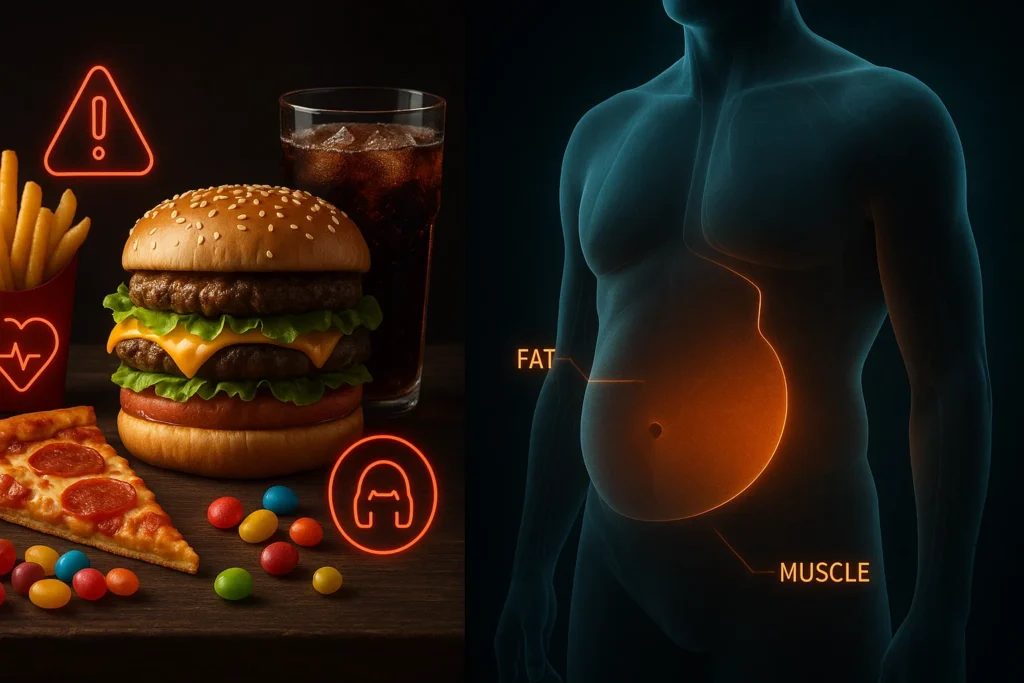

Junk food is everywhere—fast food restaurants, snacks, soft drinks, and packaged goodies. They are tasty, convenient, and easy to grab. But eating junk food every day can have serious effects on your body over time. Unlike healthy meals, junk food is usually high in sugar, salt, unhealthy fats, and empty calories. Consuming it regularly can increase body fat, weaken muscles, and gradually reduce your energy levels.
In this article, we’ll explore why junk food is harmful, how it affects fat storage, muscles, and energy, and what happens inside the body when you make it a daily habit.
What Is Junk Food?
- Foods that are high in calories but low in nutrients.
- Examples include:
- Packaged chips, cookies, and chocolates
- Fast food burgers, fries, and pizzas
- Sugary drinks, sodas, and energy drinks
- Ice creams, candies, and fried snacks
- Usually, junk food contains:
- Trans fats and saturated fats – increase bad cholesterol
- Excess sugar – spikes blood sugar levels
- High salt content – affects blood pressure
- Additives and preservatives – can impact digestion
How Junk Food Increases Body Fat
Eating junk food regularly leads to weight gain because:
1. High-Calorie Intake
- Junk foods are calorie-dense but not filling.
- Eating them increases total daily calories beyond what the body burns.
- Excess calories are stored as fat in the body, leading to gradual weight gain.
2. Sugar Spikes and Insulin Response
- Sugary foods cause a rapid rise in blood sugar.
- The pancreas releases insulin to lower sugar levels.
- Excess insulin promotes fat storage, especially around the belly.
3. Unhealthy Fats
- Trans fats and fried oils are harder to burn for energy.
- They accumulate in the body as visceral fat, which can increase the risk of heart disease.
How Junk Food Weakens Muscles
Muscles require protein, vitamins, minerals, and exercise to stay strong. Junk food negatively affects muscles because:
1. Low Protein Content
- Most junk foods contain very little protein.
- Protein is essential for muscle repair and growth.
- Without enough protein, muscles become weaker over time.
2. Poor Nutrient Supply
- Vitamins like B-complex, magnesium, and calcium are needed for muscle function.
- Junk food is deficient in these nutrients, affecting muscle strength and coordination.
3. Fat and Inflammation
- Trans fats in junk food can cause inflammation in muscles.
- Chronic inflammation makes muscles recover slower after exercise.
How Junk Food Reduces Energy Levels
Although junk food gives a temporary “sugar rush,” long-term effects reduce overall energy.
1. Rapid Blood Sugar Drops
- High sugar content causes energy spikes followed by crashes.
- After a sugar crash, people feel tired, sluggish, and less motivated.
2. Poor Nutrient Absorption
- Junk food lacks essential vitamins and minerals for energy production.
- Nutrients like iron, B-vitamins, and magnesium are critical for converting food into energy.
- Deficiency leads to fatigue and low stamina.
3. Gut Health Problems
- Junk food can harm gut bacteria, reducing nutrient absorption.
- Poor gut health affects energy, mood, and overall metabolism.
Other Health Risks of Daily Junk Food Consumption
- Heart Health: Increased bad cholesterol (LDL) and high blood pressure.
- Diabetes Risk: High sugar intake can lead to insulin resistance.
- Mental Health: Diets high in junk food can increase anxiety, depression, and mood swings.
- Digestive Issues: Processed food can cause bloating, constipation, and stomach discomfort.
- Addiction: Junk food triggers dopamine release, leading to cravings and overeating.
Tips to Reduce Junk Food Intake
1. Plan Meals
- Include whole foods, fruits, vegetables, lean proteins, and whole grains.
2. Healthy Snacks
- Replace chips and cookies with nuts, fruits, or yogurt.
3. Stay Hydrated
- Drink water instead of sugary drinks.
4. Cook at Home
- Homemade meals allow control over ingredients, salt, and sugar levels.
5. Avoid Emotional Eating
- Many people eat junk food when stressed. Try meditation or exercise instead.
Conclusion
Eating junk food every day may seem convenient and tasty, but it has hidden dangers. It gradually increases fat in the body, weakens muscles due to poor protein and nutrient supply, and reduces energy levels by causing sugar crashes and nutrient deficiencies. Over time, this lifestyle can lead to serious health problems, including obesity, diabetes, heart disease, and chronic fatigue.
Switching to a balanced diet, reducing junk food, and focusing on fresh, nutrient-rich meals can help maintain healthy weight, stronger muscles, and higher energy levels. Your body functions best when it gets the right fuel, and junk food is far from ideal.
For the Best Money saving Online shopping deals, JOIN our Telegram Channel https://t.me/crazziee_stuff1