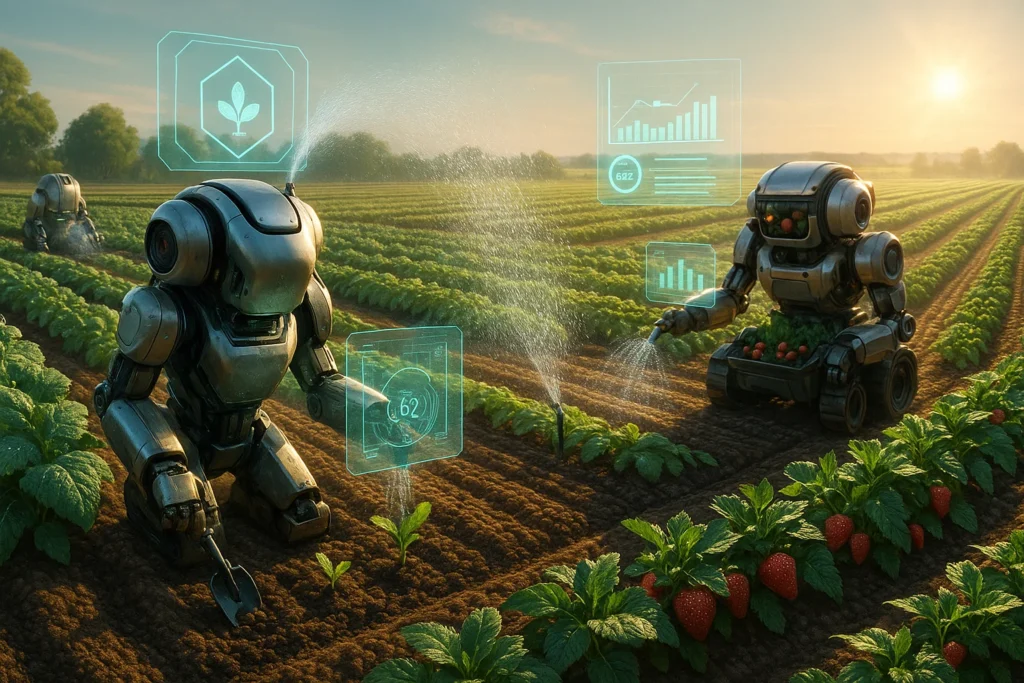

Farming is one of the oldest professions, yet it is also one of the most labor-intensive. Planting seeds, watering crops, and harvesting produce require long hours of hard work and careful attention. But what if robots could assist farmers in these tasks? With advanced robotics, artificial intelligence, and automation, the future of farming could become faster, easier, and more efficient. This article explores how robots could transform agriculture, their benefits, challenges, and potential impact on food production.
How Robots Could Help Farmers
Robots in agriculture, often called agri-bots, are designed to perform repetitive and physically demanding tasks. These robots can work day and night, improving efficiency and productivity.
1. Planting Crops
- Precision Planting: Robots can plant seeds at exact depths and spacing, ensuring optimal growth conditions.
- Faster Planting: A single robot can cover acres of land much faster than human labor.
- Reduced Waste: Precise planting reduces seed wastage and improves crop yield.
- Autonomous Navigation: Using GPS and sensors, robots can move across fields without missing areas or overlapping planting.
2. Watering and Irrigation
- Automated Irrigation: Robots can monitor soil moisture and water plants as needed.
- Smart Water Management: By analyzing soil conditions, robots prevent overwatering or underwatering, conserving water.
- Time Efficiency: Automated watering reduces the need for farmers to manually hose or irrigate large fields.
- Integration with Weather Data: Robots can adjust watering schedules based on rainfall forecasts.
3. Harvesting Crops
- Selective Harvesting: Robots equipped with cameras and AI can identify ripe crops and pick them without damaging other produce.
- Faster Harvesting: Machines can work longer hours than humans, speeding up the harvest and reducing crop losses.
- Labor Shortages: In regions where farming faces labor shortages, robots can fill in the gaps.
- Consistency: Robots perform tasks consistently, reducing errors caused by human fatigue.
Benefits of Using Robots in Farming
1. Increased Productivity
- Robots can work 24/7, planting, watering, and harvesting crops without breaks.
- This increased efficiency can significantly boost overall agricultural output.
2. Cost Savings
- While initial investments in robots can be high, long-term savings are significant.
- Fewer workers are needed for labor-intensive tasks, reducing ongoing labor costs.
3. Better Crop Management
- Robots can monitor soil conditions, detect pests, and ensure plants receive the right nutrients.
- Early detection of crop diseases helps prevent large-scale damage.
4. Improved Sustainability
- Precision farming reduces the use of water, fertilizers, and pesticides.
- Robots can contribute to environmentally friendly farming practices.
5. Reduced Physical Strain
- Farming is physically demanding work, often leading to injuries and fatigue.
- Robots can take over repetitive and strenuous tasks, improving the health and safety of farmers.
Real-World Examples of Agricultural Robots
- Seeding Robots: Machines like the “Autonomous Seeder” plant seeds efficiently in large fields.
- Weeding Robots: Robots use AI to detect and remove weeds, reducing the need for chemical herbicides.
- Harvesting Robots: Devices such as fruit-picking robots can gently harvest delicate crops like tomatoes and strawberries without damage.
- Drones for Monitoring: Flying drones can assess crop health, detect pests, and monitor irrigation.
Challenges of Implementing Robots in Agriculture
1. High Initial Cost
- Advanced farming robots can be expensive, making them difficult for small-scale farmers to afford.
2. Technical Knowledge Required
- Farmers need training to operate, maintain, and troubleshoot robots.
- Without proper knowledge, the machines may not perform efficiently.
3. Dependence on Technology
- Malfunctions, power outages, or software errors could disrupt farm operations.
4. Job Displacement
- Automation may reduce the demand for traditional farm labor, creating social and economic challenges in rural areas.
5. Environmental and Soil Concerns
- Heavy robots could compact soil in large fields if not designed with care, affecting long-term soil health.
The Future of Robot-Assisted Farming
The potential for robots in agriculture is vast:
- Integration with AI and IoT: Future robots could analyze real-time data about weather, soil, and crop health to make intelligent decisions.
- Fully Automated Farms: Entire farms may operate autonomously, with robots planting, watering, and harvesting crops with minimal human supervision.
- Sustainable Agriculture: By using precision techniques, robots could help produce more food with fewer resources, helping meet global food demands.
- Collaboration with Humans: Robots are expected to assist rather than replace farmers entirely, handling labor-intensive tasks while humans focus on management and strategic planning.
Conclusion
If robots could help farmers plant, water, and harvest crops faster and more easily, the agricultural industry would see a major transformation. These machines could increase productivity, reduce costs, conserve resources, and improve the safety and efficiency of farm work. While challenges like high costs and technical requirements exist, the long-term benefits make robot-assisted farming a promising solution for the future of food production. With continued advancements, robots could become an integral part of modern agriculture, helping to feed a growing global population more efficiently and sustainably.
For the Best Money saving Online shopping deals, JOIN our Telegram Channel https://t.me/crazziee_stuff1