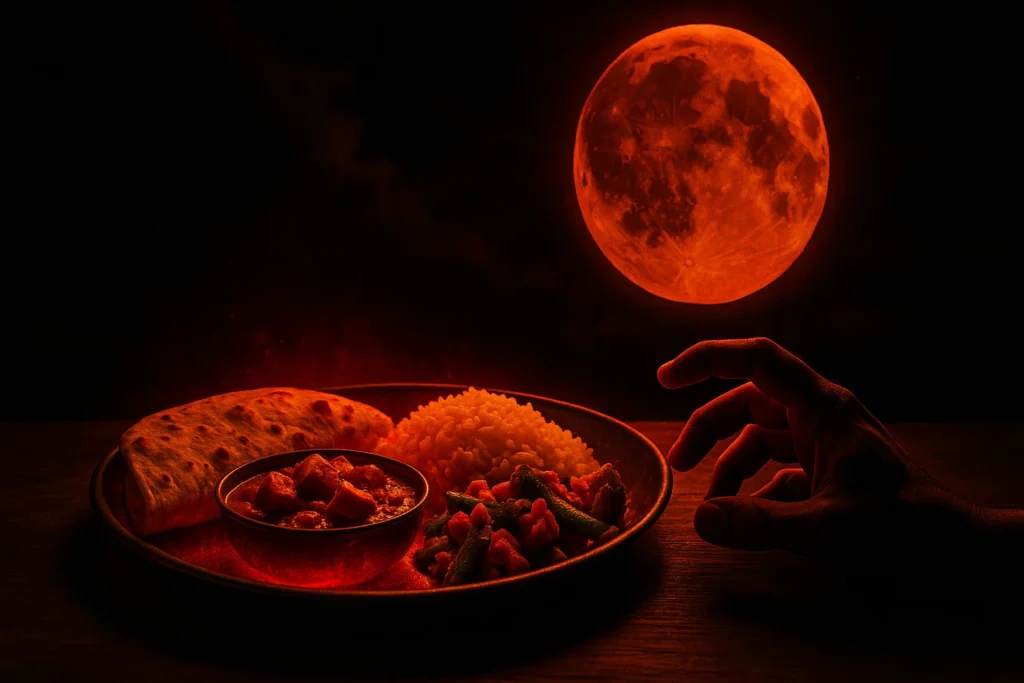

A Chandra Grahan (lunar eclipse) is a natural event that happens when the Earth comes between the Sun and the Moon, casting a shadow on the Moon. While science explains it as a normal celestial alignment, in many cultures, especially in India, lunar eclipses are surrounded by strong traditions, superstitions, and rituals. One of the most common beliefs is that people should avoid cooking and eating food during Chandra Grahan.
But why do people follow this? Is it science, culture, or simply tradition? Let’s explore both sides in detail.
The Cultural and Religious Beliefs
For centuries, Hindu scriptures and traditions have viewed eclipses — both solar (Surya Grahan) and lunar (Chandra Grahan) — as inauspicious times. Many households still follow these practices:
- Avoiding Cooking:
It is believed that cooking food during an eclipse absorbs negative energies. Freshly cooked food is thought to become impure or spiritually harmful if prepared during the eclipse. - Not Eating Food:
Many families fast or stop eating during the grahan period. Food cooked or stored before the eclipse is either discarded or not eaten until after the eclipse has ended and purification rituals are done. - Ritual Purification:
After the eclipse, people sometimes take a bath, clean their homes, and prepare fresh food. Temples often remain closed, and special prayers are done after the event. - Spiritual Explanation:
According to Hindu mythology, the demon Rahu is responsible for eclipses. When Rahu “swallows” the Sun or the Moon, it creates an eclipse. During this time, it is said that harmful cosmic rays or spiritual impurities affect Earth, including food.
The Scientific Explanation
Modern science does not consider eclipses harmful in themselves. They are simply natural events caused by the positions of Earth, Sun, and Moon. However, the belief about avoiding food during Chandra Grahan may have some practical or health-based roots if we look deeper.
1. Effect of Microorganisms on Food
In the past, there were no refrigerators or proper storage methods. People noticed that food left out during an eclipse spoiled faster or developed a strange smell. Science later explained that during this time, changes in temperature, humidity, and natural bacterial growth could affect food. This may have been exaggerated into the idea that food becomes poisonous.
2. Ultraviolet and Infrared Rays
Some scientists suggest that during an eclipse, small changes in radiation might occur because of the way sunlight bends around Earth. Though not harmful for humans in normal exposure, older generations may have felt safer by avoiding food until the eclipse ended.
3. A Practical Way to Fast
In many Indian traditions, fasting is a form of cleansing the body and mind. Linking fasting with natural events like eclipses might have been a way to encourage people to rest, detox, and focus on spirituality during these rare celestial events.
Why Tulsi Leaves Are Added to Food
One interesting practice is placing Tulsi (holy basil) leaves in food and water during an eclipse. Tulsi is known in Ayurveda and modern science for its antibacterial and medicinal properties.
Adding Tulsi leaves may have been a way to protect food from microbial contamination, especially before refrigeration existed. Over time, this became a religious custom, given sacred meaning in Hindu households.
Modern Scientific Viewpoint
Today, with refrigerators, safe cooking methods, and better knowledge of germs, scientists argue there is no actual harm in eating or cooking during a lunar eclipse. Food does not suddenly become toxic just because the Moon is in Earth’s shadow.
However, traditions continue because:
- They are deeply rooted in religion and culture.
- Families pass them down for generations.
- Rituals provide a sense of discipline and spiritual connection.
- Many people see it as respect for ancient wisdom.
The Psychological Factor
Beliefs also create a psychological effect. If a person strongly believes that food eaten during Chandra Grahan is harmful, they may feel sick or guilty after eating it, even if the food was safe. This is called the placebo (or nocebo) effect. Cultural conditioning can make people physically react to beliefs.
Practices Still Followed During Chandra Grahan
Even today, in many Indian households, these customs are followed:
- Pregnant women are advised to stay indoors, as old traditions linked eclipses with harm to unborn babies.
- People avoid sharp objects, cooking, or starting new work.
- Some chant mantras or meditate during the eclipse.
- After the eclipse ends, many take a holy bath and clean the kitchen before preparing fresh meals.
While some of these practices are based on old science (like avoiding spoiled food), others are purely cultural or symbolic.
The Balance Between Science and Tradition
It is important to respect traditions because they carry cultural identity and spiritual meaning. At the same time, we should also understand the scientific truth.
- From a scientific view: Food is safe during Chandra Grahan. There is no evidence that an eclipse changes its nutritional value or makes it harmful.
- From a traditional view: Avoiding food and cooking during the eclipse is part of respecting ancient customs and connecting with spirituality.
In many modern families, people strike a balance. Some continue the rituals exactly, while others follow only symbolic practices, like fasting for a short time or adding Tulsi leaves, without strictly believing the food is unsafe.
Final Thoughts
The practice of avoiding food and cooking during Chandra Grahan is a blend of ancient science, religious belief, and cultural tradition. While modern science says there is no danger in eating during an eclipse, these customs developed in a time when food storage was poor, and rituals gave people a sense of safety and discipline.
Today, whether you choose to follow the tradition or not depends on personal belief. For some, it is a sacred ritual tied to faith. For others, it is simply a beautiful story passed down by ancestors. What matters most is understanding the reason behind the practice and respecting both science and tradition.
For the Best Money saving Online shopping deals, JOIN our Telegram Channel https://t.me/crazziee_stuff1