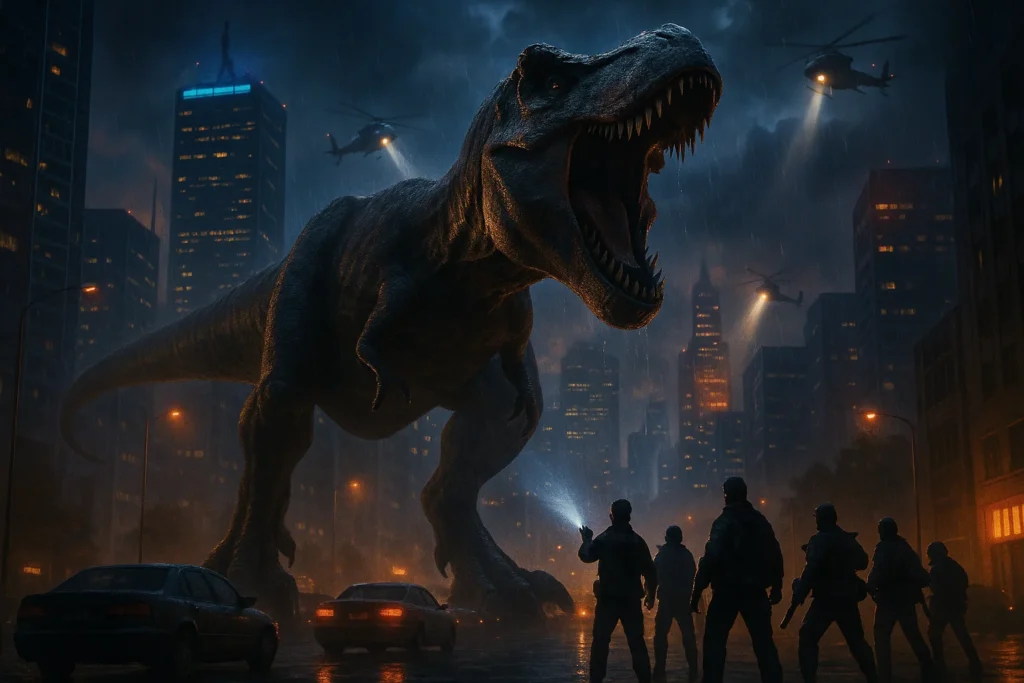

Dinosaurs ruled the Earth for more than 165 million years before going extinct about 66 million years ago. Today, humans are the dominant species, shaping the world with cities, technology, and industries. But what if dinosaurs had never gone extinct? How would humans and these prehistoric giants share the planet? Would we live peacefully side by side, or would survival become a daily struggle? Let’s explore this fascinating “what if” scenario in a realistic way.
Dinosaurs in a Modern World
If dinosaurs were still alive today, the world would look completely different. Our forests, grasslands, and even oceans would be filled with creatures ranging from the small Compsognathus, the size of a chicken, to the enormous Argentinosaurus, which could grow longer than 100 feet.
Cities and towns would need to be designed differently. Tall walls, strong barriers, and advanced security systems would be required to keep large carnivorous dinosaurs like Tyrannosaurus rex, Allosaurus, or Spinosaurus away from human settlements. Instead of worrying about stray dogs or tigers in some regions, people might face the risk of Velociraptors sneaking into villages at night.
The Struggle for Land and Resources
Humans and dinosaurs would both need land, food, and water. This would cause huge conflicts.
- Vegetation and Crops: Giant herbivores like Brachiosaurus or Triceratops could wipe out farmlands within hours. A herd of Sauropods could eat tons of plants in a single day, leaving farmers with nothing. Protecting crops would be one of humanity’s biggest challenges.
- Predators vs. Humans: Carnivorous dinosaurs would compete with humans for food sources like livestock, deer, or fish. Just as lions and leopards sometimes attack cattle in rural areas today, a T. rex or raptor pack could easily attack farms, threatening both animals and people.
- Urban Expansion: With dinosaurs roaming around, building cities and highways would be extremely difficult. Humans might end up creating large enclosed zones, similar to giant safaris or fenced habitats, just to protect themselves.
Changes in Human Lifestyle
If dinosaurs coexisted with us, daily life would be very different.
- Transportation: Highways and railways would constantly face risks from large dinosaurs crossing the tracks or roads. Air travel might be safer, but smaller aircraft could still face threats if large flying reptiles like Pteranodons existed.
- Housing: Homes in rural areas would need to be built like fortresses. Tall fences, electrified barriers, and underground shelters might become common.
- Work and Safety: Outdoor jobs like farming, construction, or mining would require heavy protection. People might even need weapons or special vehicles to defend themselves in dangerous zones.
The Role of Technology
Humans are intelligent and adaptable, so technology would play a big role in survival.
- Weapons and Defense: Just as we build weapons to protect ourselves from threats, advanced tranquilizers, electric barriers, and drones could be used to control or monitor dinosaurs. Military forces might even be trained to handle dinosaur attacks.
- Tracking Systems: GPS collars, drones, and satellite monitoring would help keep track of dinosaur movements, just as wildlife departments track elephants and tigers today.
- Genetic Research: Scientists would likely study dinosaur DNA, perhaps even trying to control their growth or behavior. Zoos and research centers might become more like dinosaur reserves, carefully designed to keep humans safe.
Environmental Impact
Dinosaurs would greatly affect the environment if they still lived today.
- Ecosystem Balance: Some ecosystems might collapse. For example, too many herbivores could destroy forests and grasslands, while too many carnivores could wipe out existing animals like deer, buffalo, or elephants.
- Extinction of Other Animals: Many modern species might not survive. Large mammals such as elephants, rhinos, or giraffes could be pushed to extinction because dinosaurs would dominate the same ecological niches.
- Climate and Geography: Dinosaurs required large amounts of food and water. Rivers, lakes, and grasslands would shrink faster, possibly causing new environmental crises.
Human and Dinosaur Interaction
It is natural to wonder whether humans could tame dinosaurs, much like we domesticated horses, dogs, and cattle.
- Possible Domestication: Small or medium-sized herbivores might be tamed for farming or transportation. Imagine people using Iguanodons or smaller hadrosaurs as working animals.
- Dangerous Pets: Some might even try to keep small raptors as exotic pets, though this would be extremely risky.
- Tourism: Just as people visit safaris in Africa, dinosaur safaris could become a booming industry. Tourists might pay to see a living Stegosaurus or Triceratops. However, safety would always remain a huge concern.
Conflict or Coexistence?
The biggest question is: could humans and dinosaurs coexist peacefully?
Realistically, peaceful coexistence would be very difficult. Humans already struggle to live alongside wild animals like tigers, elephants, and crocodiles. These animals sometimes destroy crops, attack villages, or clash with hunters. Dinosaurs, being far larger and more powerful, would make this problem a thousand times worse.
In some areas, humans might wipe out dangerous dinosaur species to survive, just as we did with wolves, lions, or bears in certain parts of the world. Protected reserves might be created for herbivores, while carnivores would be heavily controlled or eliminated.
Lessons from This Thought Experiment
Even though dinosaurs are extinct, thinking about their return teaches us important lessons.
- Respect for Nature: Dinosaurs remind us that Earth once belonged to other creatures. Humans are not the first rulers of the planet.
- Coexistence Challenges: If we struggle today to coexist with elephants, tigers, and bears, we can imagine how much harder it would be with creatures many times larger and stronger.
- The Fragility of Humans: Despite our intelligence and technology, humans are physically weak compared to dinosaurs. Our survival depends on tools, teamwork, and innovation.
Conclusion
If dinosaurs still existed today, the world would be full of both wonder and danger. Giant sauropods could amaze us with their size, while predators like T. rex would terrify entire cities. Humans would need to use technology, strategy, and teamwork just to survive. Farms, cities, and entire industries would be redesigned to deal with the constant presence of prehistoric giants.
In reality, humans and dinosaurs would likely clash more than coexist. While some smaller species might be tamed or studied, larger carnivores would pose an unstoppable threat. The balance of power on Earth might never belong to humans alone.
Dinosaurs may be gone forever, but imagining their return helps us appreciate the challenges of sharing a planet with powerful creatures—and reminds us to respect and protect the animals that still live with us today.
For the Best Money saving Online shopping deals, JOIN our Telegram Channel https://t.me/crazziee_stuff1